Last updated 2026-08-17
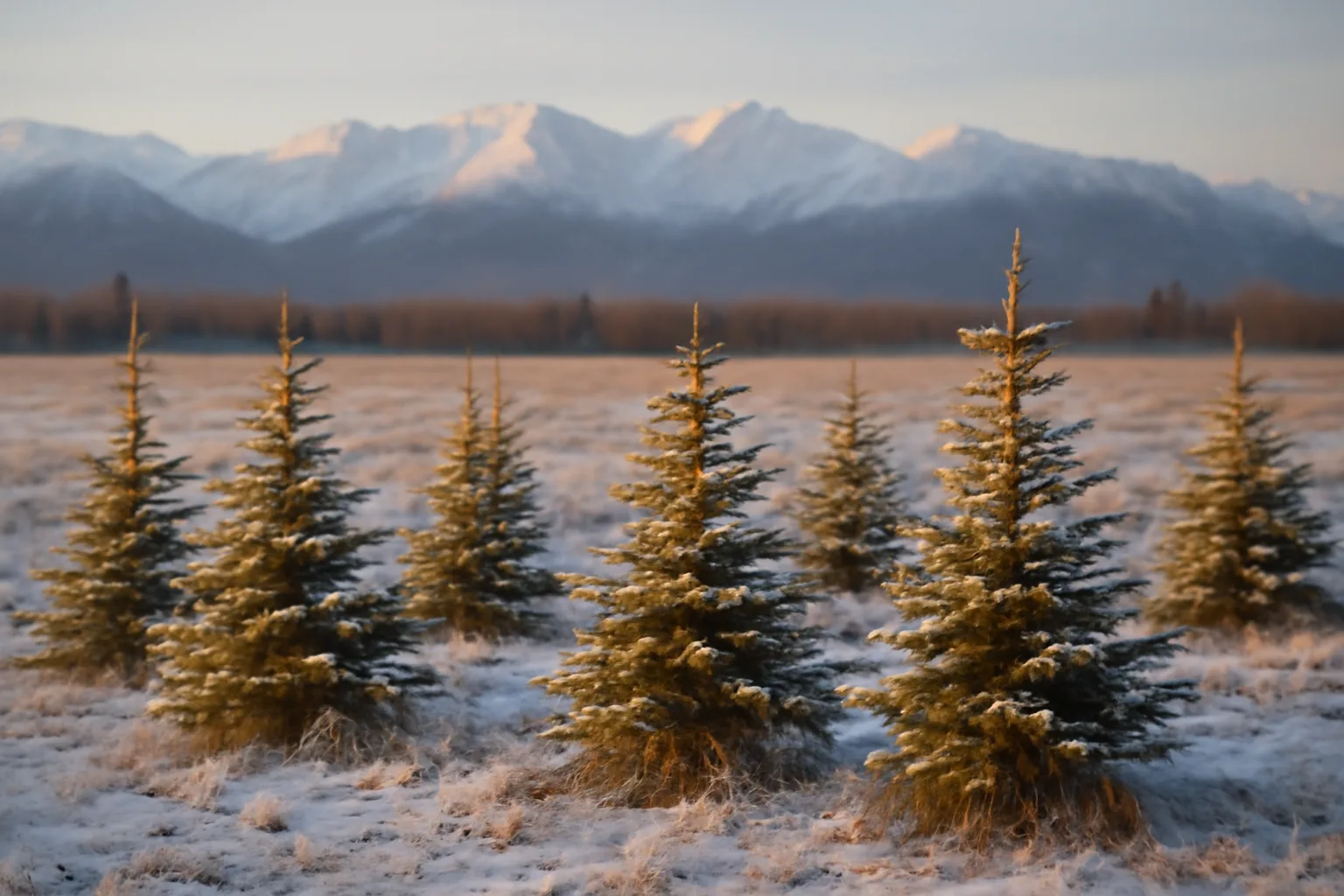
TL;DR
Alaska has no dedicated christmas tree farm board. You register your business with the Alaska Division of Corporations, get a Nursery Dealer license from the Alaska Department of Natural Resources if you sell live trees, and secure any land use permits. Startup for a small operation runs $15,000 to $80,000. Plan on 10 or more years before your first harvestable crop.
Does Alaska have a christmas tree farm board?
No. Alaska has no dedicated christmas tree farm board, commission, or grower association with licensing authority. That's not a gap in your research. It's how Alaska is built. The state is enormous, the commercial tree-growing industry is small next to Oregon or Michigan, and regulation falls across a few different agencies instead of one central body.
The agencies you'll actually deal with are the Alaska Division of Corporations, Business and Professional Licensing (for your business entity), the Alaska Department of Natural Resources Division of Agriculture (for nursery dealer registration if you sell live plant material), and possibly the Bureau of Land Management or Alaska DNR Division of Forestry if you're farming on state or federal land [1][2].
If you're cutting trees from a national forest, the U.S. Forest Service enters the picture, specifically under its Christmas Tree Permit program for personal-use cutting on federal land [3]. Commercial growers on private land deal mainly with state agencies.
There is a national trade body, the National Christmas Tree Association. It has no regulatory function in Alaska. Membership is voluntary and gives you access to industry research and marketing programs, not a license [4].
Do you need a license to run a christmas tree farm in Alaska?
It depends on what you're selling and where you're growing. Grow trees on your own private land and sell cut trees to retail customers or lots, and you need a standard Alaska business registration but generally no agricultural production license for the growing itself. Alaska does not require a grower's license to plant and harvest trees on private land you own.
Sell live trees, live seedlings, rooted cuttings, or any nursery stock (which includes potted Christmas trees a buyer might plant), and you're legally operating as a nursery dealer under Alaska Statute 03.05. That means you must register with the Alaska Department of Natural Resources Division of Agriculture [1][9]. The statute defines nursery stock broadly enough that potted Nordmann firs or living Douglas firs sold at retail almost certainly qualify.
Your baseline paperwork stack looks like this:
| Step | Agency | What You File |
|---|---|---|
| Business entity (LLC or corporation) | Alaska Division of Corporations | Articles of Organization or Incorporation [2] |
| Registered agent designation | Alaska Division of Corporations | Included with entity filing |
| Nursery Dealer registration (if selling live stock) | Alaska DNR Division of Agriculture | Nursery Dealer application + fee [1] |
| Land use permit (if on state land) | Alaska DNR Division of Forestry | Special Use Permit or Land Lease [5] |
| Federal land permit (if cutting on USFS land) | U.S. Forest Service | Commercial Timber Sale permit or Christmas Tree permit [3] |
| Local business license | Your borough or municipality | Varies by location |
Alaska also has a statewide business license requirement, administered through the Division of Corporations. On the current fee schedule, the Alaska business license costs $50 for two years, but confirm current fees directly with the division because the legislature adjusts them periodically [2].
Some growers also ask about pesticide applicator licensing. Apply restricted-use pesticides to control weeds, insects, or disease on your trees, and Alaska requires a Commercial Pesticide Applicator license through the Alaska Department of Environmental Conservation [6]. Many small operations start with general-use products to skip this requirement, but that limits your options on tough pest years.
How much does starting a christmas tree farm in Alaska cost?
A small to mid-size choose-and-cut farm in Alaska costs more to start than one in the lower 48. Freight, climate, and a thin local supply chain all push the numbers up. Here's what actually drives them.
Seedling costs vary by species. Sitka spruce, white spruce, and subalpine fir are the most cold-hardy options for Interior and Southcentral Alaska. Bare-root seedling prices from certified nurseries typically run $0.50 to $2.50 each, and shipping to Alaska can add 30 to 60 percent depending on your location [7]. For a one-acre planting at 1,500 trees per acre, that's $1,125 to $5,625 in seedlings before freight.
Land costs vary enormously. Interior Alaska raw agricultural land can be leased from the state through DNR's Agricultural Land program at rates that have historically run well under $10 per acre per year for qualified agricultural leases, but the application process is competitive and suitable acreage is limited [5]. Private land in the Matanuska-Susitna Valley, the most practical farming corridor for most operators, runs from around $3,000 to $15,000 per acre depending on road access, clearing status, and how close you are to Anchorage.
Equipment for a startup runs to a tractor or ATV ($8,000 to $45,000 new, much less used), a shearing blade or trimming tools ($200 to $800), and basic irrigation if your site needs it. Alaska's summer rainfall is inconsistent, especially in the Mat-Su Valley, so budget for at least a simple drip or sprinkler setup.
Licensing and permit fees are a small share of the total. Business entity filing in Alaska runs $250 for an LLC [2]. The Nursery Dealer registration fee (confirm with Alaska DNR Division of Agriculture because it can change) has historically sat in the $50 to $150 range per year [1].
First-year capital outlay for a 2 to 5 acre operation realistically lands between $15,000 and $80,000. The wide range reflects whether you already own land, whether you need to clear it, and how much equipment you're starting with.
How long does it take to grow Christmas trees in Alaska?
This is the number most people underestimate. In the continental U.S., a Christmas tree usually takes 7 to 10 years to reach the 6-foot market size. In Alaska, add 2 to 4 years for most Interior and Southcentral locations.
Growing degree days in the Matanuska-Susitna Valley run much lower than in, say, western Oregon. White spruce in Southcentral Alaska grows roughly 6 to 12 inches per year under good conditions [8]. At that rate, reaching a 6-foot tree from a one-year-old transplant takes 9 to 12 years minimum. Some growers in warmer coastal Southcentral locations report growth closer to the national average, but that's the exception.
The long rotation is the central financial reality of any Alaska Christmas tree farm. You put money in for a decade before you see meaningful revenue. Plant in year one and your first harvestable crop might come in year 10 to 13. Staggered planting, where you plant a new block every year or every two years, is how established farms smooth out the revenue gap. You start harvesting one block while younger blocks mature.
Want to shorten the wait? Buying larger transplants (2-year-old or 3-year-old plugs rather than first-year seedlings) compresses the timeline by a couple of seasons. The per-tree cost is higher, but the years-to-harvest drop by a meaningful margin.
Permit timelines are separate from the growing timeline. An Alaska DNR land lease application for agricultural land can take 6 to 18 months from application to approval, depending on whether the parcel is already designated for agricultural use [5]. Business registration and nursery dealer registration are much faster, usually 2 to 6 weeks if your paperwork is complete.
What land and forestry permits does Alaska require for tree farms?
Farm on your own private land and the permitting burden is light. You need your business license, your nursery dealer registration if it applies, and local zoning clearance. Most rural Alaska boroughs don't have heavy zoning restrictions on agricultural activities, but verify with your specific borough.
State land is a different story. The Alaska Department of Natural Resources manages over 100 million acres of state land, and agricultural leasing is available through DNR's Division of Agriculture and its land disposal programs [5]. Applicants must submit a farm plan showing how they'll put the land into agricultural use. The state can require annual reports on acreage under cultivation. Applications go through a public notice period, and competing applicants can stretch the timeline.
Federal land, including national forests, is a separate track entirely. The Chugach National Forest and Tongass National Forest together cover most of coastal and Southcentral Alaska. Christmas tree cutting on national forests for commercial purposes requires a timber sale contract or a specialized commercial permit, which is distinct from the free personal-use cut permits available to individuals [3]. Commercial permits go to competitive bidding in some areas, and available acreage shifts year to year based on forest management plans.
One thing worth knowing: the Tongass is the largest national forest in the U.S., covering about 17 million acres [10]. It's not short on trees, but commercial Christmas tree operations on it are rare because the permit structure is built for timber, not managed cultivation. Most serious Alaska Christmas tree farm businesses operate on private or state-leased land where they can plant, shape, and shear on their own schedule.
Comparing Alaska's land permit complexity to other states? The approach in states like Idaho and Colorado shows how much variation exists even among western states with large federal land footprints.
Which tree species actually work for Christmas tree farming in Alaska?
Species selection is where a lot of first-time Alaska growers lose years they can't get back. The wrong species in the wrong zone grows slowly, gets deformed by snow load, or dies in a cold snap. What works depends heavily on your location.
White spruce (Picea glauca) is the most practical choice for Interior Alaska and the Mat-Su Valley. It's native to the region, handles cold snaps down to minus 40 degrees F, and produces a full, dense tree that holds its needles reasonably well [8]. Growth is slow but steady.
Sitka spruce (Picea sitchensis) performs well in coastal and maritime areas like the Kenai Peninsula and Southeast Alaska. It grows faster than white spruce under maritime conditions but does not tolerate Interior cold [8].
Subalpine fir (Abies lasiocarpa) has a natural range in Alaska and produces a fragrant, good-looking tree. It's fussier about soil and drainage than spruce and slower to establish, but growers who get it right tend to command a premium.
Douglas fir is not native to Alaska and is generally not suitable north of the Alaska panhandle. A few growers in the extreme southern panhandle have had limited success, but it's a gamble.
The University of Alaska Fairbanks Cooperative Extension Service has published guidance on agricultural species suitability by climate zone, and it's worth reading before you commit to a species and source your seedlings [8].
How does Alaska's choose-and-cut market actually work?
Alaska's consumer market for Christmas trees is real and undersupplied by local farms. Most trees sold in Alaska ship in from the Pacific Northwest, so freight is baked into retail prices. Local choose-and-cut trees don't carry that freight. That's a genuine structural advantage for in-state growers.
Retail Christmas tree prices in Alaska run above the national average partly because of freight. The National Christmas Tree Association's annual consumer survey has tracked average cut tree retail prices nationally around $80 to $100, but Alaska retail lot prices for shipped trees regularly run $120 to $200 or more for a six-foot tree (confirm current local prices before you build financial projections) [4].
Choose-and-cut operations add an experience component that commands further premiums. Families pay more to cut their own tree, and operators in Southcentral Alaska near Anchorage or the Mat-Su Valley have a population base of roughly 300,000 to 400,000 people within a two-hour drive.
The season is short. By early December, Southcentral Alaska has very little daylight, and temperatures can drop well below freezing by mid-November. Successful choose-and-cut operators typically run from mid-October through the first or second week of December and plan operations around headlamp-and-thermos conditions by late November.
Wholesaling cut trees to Anchorage retailers or tree lots is an alternative revenue model, but it means competing on price with shipped-in product. That's a tougher margin position than selling direct.
What ongoing compliance does an Alaska christmas tree farm need to track?
Once you're open, the compliance calendar isn't overwhelming, but it has real deadlines.
Your Alaska business license renews every two years. The Division of Corporations sends renewal notices, but don't rely on the mail. Set a calendar reminder [2].
Nursery dealer registration, if it applies, renews annually with the Alaska Department of Natural Resources Division of Agriculture. Miss the renewal and you're technically operating without a required registration during the gap [1].
On a state agricultural land lease, DNR typically requires an annual farm plan update or compliance report showing active cultivation. Falling out of compliance with farming use requirements can be grounds for lease termination [5].
Pesticide applicator licenses, if you hold one, carry renewal and continuing education requirements through the Alaska Department of Environmental Conservation [6].
Federal land permits, if you're cutting on national forest, are generally year-specific and must be renewed before each season [3].
Want a systematic way to track the full first-year paper stack? The ChooseAndCutPath Shear-Year + Choose-and-Cut Kit ($149 one-time) organizes the licensing sequence, planting timelines, and compliance calendar into a single reference built for new operators. You can find it at /start. The kit doesn't replace the agencies. It just keeps you from missing a step.
How does Alaska compare to other states for christmas tree farm startup?
Alaska is one of the harder states to start a christmas tree farm in. The growing timeline is longer, the climate is less forgiving of species mistakes, freight inflates input prices, and the regulatory path involves more land agencies than most Lower 48 states because so much land is federally or state-managed.
States like Georgia or Florida have shorter growing cycles (5 to 7 years for many species) and a simpler land permit environment for private land operations. You can see how the regulatory structure compares in states like Georgia or Florida. The Pacific Northwest states (Oregon, Washington, Idaho) have longer traditions and more developed nursery supply chains, which lowers seedling procurement costs a lot compared with shipping to Alaska.
That said, Alaska's market gap is real. Local supply is thin, consumer prices are high, and a well-located Southcentral operation near Anchorage or Wasilla has a captive audience. States with saturated markets, parts of the Midwest and Mid-Atlantic, face a very different competitive picture despite easier growing conditions.
If you're in Alaska and weighing whether to farm here or explore options in an adjacent state, Idaho offers a middle path: better growing conditions, substantial federal land access, and a developed industry, but at the cost of losing Alaska's local market premium.
Where do you actually file each permit and registration in Alaska?
Here's the direct filing map so you're not hunting across agency websites.
Business entity (LLC or corporation): Alaska Division of Corporations, Business and Professional Licensing, online through the Alaska business license portal at commerce.alaska.gov [2].
Alaska Business License (separate from entity registration): same Division of Corporations portal. You need both an entity registration and a business license. They are not the same thing.
Nursery Dealer registration: Alaska Department of Natural Resources, Division of Agriculture. Their offices are in Palmer, the Mat-Su Valley agricultural hub. You can request forms by phone or check their website at dnr.alaska.gov [1].
Agricultural land lease application: Alaska DNR Division of Agriculture or DNR Division of Mining, Land and Water, depending on the specific parcel. Palmer is again the primary office for agricultural matters [5].
Commercial pesticide applicator license: Alaska Department of Environmental Conservation, Division of Environmental Health [6].
Federal land permits: U.S. Forest Service, either Chugach National Forest (Anchorage office) or Tongass National Forest (Juneau headquarters) depending on geography [3][10].
Local business registration and zoning clearance: your borough or municipality. Matanuska-Susitna Borough, Kenai Peninsula Borough, Fairbanks North Star Borough, and the Municipality of Anchorage each run their own process.
For context on how other western states structure their filing maps, California and Idaho have notably different agency structures despite similar federal land complexities.
Frequently asked questions
Do you need a license for a christmas tree farm in Alaska?
You need an Alaska Business License for any commercial operation, and a Nursery Dealer registration from the Alaska Department of Natural Resources if you sell live plant material. There's no specific 'Christmas tree farm license.' Farm on state or federal land and you also need land use permits from DNR or the U.S. Forest Service. Local borough licensing may apply depending on your location. Confirm current fees directly with each agency.
How much does it cost to start a christmas tree farm in Alaska?
A small 2 to 5 acre operation realistically costs $15,000 to $80,000 in the first year, depending on land costs, clearing needs, seedling freight, and equipment. Seedlings run $0.50 to $2.50 each before shipping, and shipping to Alaska adds 30 to 60 percent. Business and nursery dealer registration fees are a small fraction of startup costs, likely under $500 combined. Confirm current fee schedules with each agency.
How long does it take to grow Christmas trees in Alaska?
Plan on 10 to 14 years from planting to a harvestable 6-foot tree in most Southcentral and Interior Alaska locations. White spruce, the most practical species for the region, grows 6 to 12 inches per year under good conditions. That's 2 to 4 years longer than the national average. Buying 2- or 3-year-old transplants instead of first-year seedlings can cut your wait by a couple of seasons, at higher per-tree cost.
What species of Christmas trees grow best in Alaska?
White spruce (Picea glauca) is the most practical choice for Interior Alaska and the Matanuska-Susitna Valley; it tolerates extreme cold and grows reliably if slowly. Sitka spruce works in coastal and maritime zones like the Kenai Peninsula and Southeast Alaska. Subalpine fir produces a premium tree but is slower to establish and more sensitive to drainage. Douglas fir is generally unsuitable outside the extreme southern panhandle.
Can you cut Christmas trees on Alaska national forest land?
Yes, with a permit. The U.S. Forest Service offers personal-use Christmas tree cutting permits on the Chugach and Tongass national forests for a small per-tree fee. Commercial operations require a different permit structure, typically a timber sale contract or commercial use permit, and are subject to competitive processes and annual availability. Contact the relevant forest supervisor's office for current permit details before the season.
Does Alaska have a nursery dealer license requirement for selling Christmas trees?
If you sell live trees, rooted cuttings, or any nursery stock, yes. Alaska Statute 03.05 governs nursery dealer registration through the Department of Natural Resources Division of Agriculture. Cut trees sold for holiday decoration may fall outside this requirement, but potted trees or any living plant material almost certainly qualifies as nursery stock. When in doubt, contact the DNR Division of Agriculture in Palmer to confirm whether your specific product type requires registration.
Is there an Alaska Christmas Tree Growers Association?
There is no active Alaska-specific Christmas tree growers association with a public presence as of this writing. The national trade body is the National Christmas Tree Association, which accepts individual grower members from any state. NCTA membership gives you industry research, marketing data, and networking but carries no regulatory function. Alaska growers interested in regional networking sometimes connect through the Alaska Farm Bureau.
How do I lease state land for a christmas tree farm in Alaska?
Applications go through the Alaska Department of Natural Resources. You submit a farm plan showing intended agricultural use, and the parcel must be designated for agricultural disposal. The process includes a public notice period and can take 6 to 18 months from application to lease approval depending on the parcel and competing interest. Agricultural lease rates on state land have historically been low, but availability in suitable climate zones is limited. Contact DNR Division of Agriculture in Palmer to review current available parcels.
Do I need a pesticide license to manage weeds on my Christmas tree farm in Alaska?
If you use restricted-use pesticides, yes. The Alaska Department of Environmental Conservation requires a Commercial Pesticide Applicator license with a relevant category endorsement. General-use herbicides and pesticides don't trigger this requirement, so some small operations start with general-use products only. If your weed or pest pressure requires restricted-use products, budget time for the applicator license application and any required exam before your first planting season.
What is the retail price for Christmas trees in Alaska, and can a local farm compete?
Retail prices for shipped-in trees at Anchorage lots have historically run $120 to $200 or more for a six-foot tree, well above the national average of roughly $80 to $100, partly because of freight from the Pacific Northwest. Local choose-and-cut operations avoid that freight and can price competitively while keeping better margins than they'd get in a Lower 48 market. The experience premium for cut-your-own also supports pricing above comparable lot prices.
How long does business registration take in Alaska?
An Alaska LLC or corporation can be registered online through the Division of Corporations. Processing for standard filings is typically 2 to 4 weeks for paper submissions or faster online. Nursery dealer registration through DNR Division of Agriculture generally processes in 2 to 6 weeks if your application is complete. Neither registration has a guaranteed processing time; avoid submitting close to your intended opening date.
What is the biggest financial risk in starting an Alaska christmas tree farm?
The rotation length is the central risk. You invest in land, seedlings, labor, and equipment for 10 or more years before significant revenue. A bad cold snap, pest event, or market shift in year 8 can wipe out trees you've shaped for nearly a decade. Staggered planting, conservative species selection, and realistic cash flow modeling before year one are the main tools to manage this. Most failed operations underestimated the capital needed to bridge the pre-harvest years.
Sources
- Alaska Department of Natural Resources, Division of Agriculture: Alaska requires nursery dealer registration under AS 03.05 for sellers of live plant material including nursery stock
- Alaska Division of Corporations, Business and Professional Licensing, Business License Program: Alaska requires a biennial business license from the Division of Corporations; LLC entity filing fee is $250
- U.S. Forest Service, Christmas Tree Permits: The U.S. Forest Service issues personal-use and commercial Christmas tree cutting permits on national forest land including the Chugach and Tongass
- National Christmas Tree Association, Industry Statistics: Average national retail cut tree price has tracked around $80 to $100; NCTA membership is voluntary and carries no regulatory function
- Alaska Department of Natural Resources, Division of Agriculture: Alaska DNR leases state land for agricultural use through a competitive application process requiring a farm plan; applications can take 6 to 18 months
- Alaska Department of Environmental Conservation, Pesticide Control Program, Commercial Applicator Licensing: Alaska DEC requires a Commercial Pesticide Applicator license for application of restricted-use pesticides in commercial agricultural settings
- USDA Agricultural Marketing Service: Bare-root conifer seedling prices typically range from $0.50 to $2.50 per seedling from certified nurseries
- University of Alaska Fairbanks Cooperative Extension Service, Trees and Woody Ornamentals Publications: White spruce grows 6 to 12 inches per year under good conditions in Southcentral Alaska; Sitka spruce is suited to maritime zones; species suitability varies by climate zone
- Alaska Statutes, Title 03, Chapter 05, Agricultural Facilities and Practices: AS 03.05 is the statutory basis for Alaska's nursery dealer registration requirement
- U.S. Forest Service, Tongass National Forest: Tongass National Forest covers approximately 17 million acres, making it the largest national forest in the United States