Last updated 2026-08-18
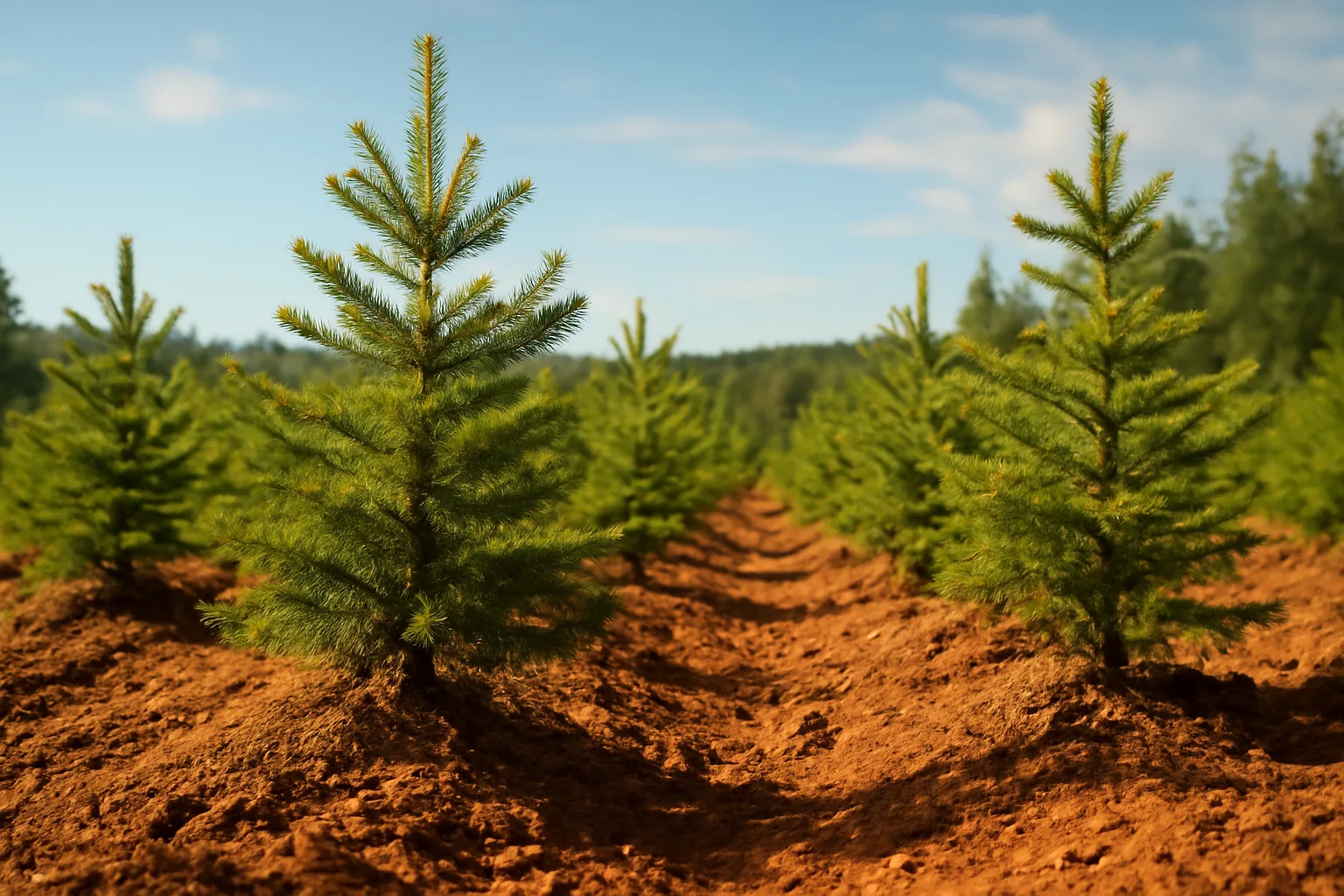
TL;DR
California does not require a dedicated state license for a christmas tree farm. You need a county business license, a CDTFA seller's permit, and county agricultural or tree removal rules. Pesticide use requires a Private Applicator Certificate from DPR. No state board governs christmas tree farms. Paper costs run $100 to $900, plus bonding if you resell wholesale trees. Timeline: 3 to 6 weeks for core permits.
Do you need a license for a christmas tree farm in California?
No, there is no single state-issued "christmas tree farm license" in California. The state treats tree farms as general agricultural operations, which are largely regulated at the county level and through general tax and pest control laws.
The core pieces of paper you will hold:
1. A county business license. Every California business needs one, and the issuing body depends on where your farm sits. If you are in an unincorporated area, it's the county. If you are within city limits, it's the city clerk. Some counties, like Sonoma, have explicit "agricultural" license categories [1].
2. A seller's permit from the CDTFA. Required if you sell trees directly to the public (choose-and-cut or retail lot). The permit is free to obtain, but you must collect and remit sales tax on tree sales [2].
3. A Private Applicator Certificate from the California Department of Pesticide Regulation (DPR), only if you purchase and apply restricted-use pesticides. Most new growers start with no pesticides or use general-use products, which do not trigger this requirement [3].
If you import trees for resale rather than growing them, you face additional rules: an Organic Input Material registration if you sell certified organic trees, and a PACA license from the USDA if you buy over certain credit thresholds [4]. But for a classic choose-and-cut operation on your own land, none of that applies.
California is not a heavy-paper state for christmas tree growers. The real friction comes from county zoning and environmental health reviews if you plan a permanent farm stand, public parking, or accessory buildings.
What county and local permits does a California christmas tree farm need?
The county is where the real action happens. Start at the county clerk or treasurer-tax collector's office in the county where the land sits. A few specific demands to expect:
Business license. Every California county charges a fee structured around gross receipts, employee count, or a flat agricultural rate. In Butte County, for example, agricultural operations fall under a specific rate tier with lower fees than retail businesses [5]. Expect $50 to $500 for your first year, depending on projected revenue.
Zoning clearance. If your land is zoned agricultural, you likely need no special use permit for silviculture or tree farming. But if you build a permanent sales structure, add restrooms, or create off-road parking for more than a handful of cars, you may trigger a site plan review, traffic study, or septic upgrade. The cost of skipping this step is a code enforcement notice months later, so talk to the county planning department before you pour gravel.
Tree removal ordinance. Some counties (Mendocino, Santa Cruz, Sonoma) have strict tree protection ordinances. Clearing land to plant chrismas trees might require a timberland conversion permit from Cal Fire or a county-level tree removal permit if you take out native oaks or significant hardwoods. Cal Fire oversees timberland conversions under the Z'berg-Nejedly Forest Practice Act [6]. A conversion permit can cost $1,500 to $5,000 in professional forester fees alone, so this is a land-acquisition due diligence item.
Agricultural burning permits. If you plan to burn slash or cleared brush, you need a burn permit from Cal Fire and possibly the local air pollution control district. This is a seasonal permit with daily burn-day call-in requirements.
Seller's permit and sales tax for Christmas tree sales in California
If you sell anything to the public, you need a California seller's permit. The CDTFA issues permits online with no fee, and you typically receive the permit number within 2 to 3 business days [2].
The key point: christmas trees sold for decorative purposes are taxable. The CDTFA's publication on nurseries and garden supplies confirms that "ornamental trees" are taxable at the full state rate plus any applicable district taxes [7]. If you sell only uncut trees (a customer digs them out still rooted), the same rule applies unless you are selling them for commercial agricultural production, which is rare in a choose-and-cut context.
You must file sales tax returns quarterly or annually, depending on your volume. The CDTFA assigns a filing frequency when you register. Most new choose-and-cut farms with a single seasonal sales window will be annual filers.
For farmers who sell only wholesale to retail lots, a seller's permit is not required because those are resale transactions. You collect a resale certificate from the buyer instead.
Pesticide rules and the Private Applicator Certificate
This is the most misunderstood piece of the paper path. The DPR states directly: "A private applicator certificate is required for any person who uses or supervises the use of a restricted-use pesticide to produce an agricultural commodity on property they own or rent" [3].
If you never touch restricted-use pesticides, you do not need this certificate. Many California christmas tree growers rely entirely on general-use herbicides like glyphosate for ground preparation and spot treatment, which do not require certification when used on your own land [8].
The certificate process: complete an approved training program (offered by county agricultural commissioners and UC Cooperative Extension), submit an application, and pay the $50 fee. The certificate is valid for 3 years. Renewal requires 8 hours of continuing education [3].
Even without a certificate, you must follow all label requirements, maintain application records, and comply with any county-specific pesticide buffer zones near schools, waterways, or organic farms. In California, some counties (Monterey, Ventura) have stricter local rules than the state baseline.
How much does a Christmas tree farm cost in California?
First-year costs for a small choose-and-cut operation on 5 to 10 acres of owned or leased land fall into clear buckets. None of these are a state license fee because California does not have one.
Permit costs:
- County business license: $50 to $500 [5]
- Seller's permit: free [2]
- Private Applicator Certificate: $50 (only if using restricted pesticides) [3]
- Timberland conversion or tree removal permit: $0 to $5,000+ (site-dependent) [6]
Land and planting:
- Land lease for agricultural use in California foothill counties: $100-$300 per acre per year
- Seedlings: $0.50-$1.50 each depending on species, size, and volume. Planting 1,000 trees on 1 acre costs $500-$1,500
- Ground prep (discing, herbicide, subsoiling): $200-$400 per acre
- Irrigation setup for a small lot, if you lack existing ag water rights: $1,000-$5,000 (drip system, pump, filtration)
Infrastructure:
- Portable restroom rental for choose-and-cut season: $400-$600 for a 2-month season
- Gravel parking area and temporary signage: $500-$2,000
- Liability insurance: $400-$1,000 per year for a basic farm policy
Realistic total first-year outlay for a 1,000-tree choose-and-cut startup on cleared ag land: $3,000-$12,000. If you need to clear forested land with conversion permits, add $5,000-$15,000. These numbers come from UC Cooperative Extension cost studies for similar perennial crop systems [9], adjusted to smaller scale. No California-specific christmas tree cost-of-production budget exists from a public source, so confirm all inputs with your county ag commissioner's office.
How long does it take to start a Christmas tree farm in California?
The paper path is fast. The growing path is slow. Two very different timelines.
Permits and registrations: 3 to 6 weeks from application to holding all core documents.
- CDTFA seller's permit: 2-3 business days online [2]
- County business license: 1 to 4 weeks, depending on whether a zoning review is triggered [12]
- DPR Private Applicator Certificate: 2 to 3 weeks after completing the training and submitting the application [3]
Tack on more time if you need:
- Timberland conversion permit from Cal Fire: 6 to 12 months, including environmental review and public comment periods [6]
- Special use permit for a farm stand or event parking: 4 to 12 months depending on the county planning department backlog
The biological timeline is the real constraint.
- Seedling to first light harvest: 4 to 6 years for most species (Douglas fir, noble fir, Monterey pine) in California growing zones
- Full production with 6-8 foot trees: 7 to 10 years
- Soil preparation and fallow/crop rotation: 1 year before first planting
This is why the practical answer to "how long" is: 3 to 6 weeks to get the paper, 5 to 8 years to generate meaningful revenue. The autumn before your first harvest season is when you apply for the seller's permit and county business license. Applying earlier is fine; the licenses are not tied to a specific planting stage.
A common first-year approach: lease agricultural land, complete all licenses in month 1, prep soil in month 2, plant seedlings in month 3, and then spend years 2-7 on weed control, pruning, and pest monitoring. The paper path is not the bottleneck.
Is there a Christmas tree farm board or council to register with in California?
There is no government board, commission, or agency that specifically regulates or licenses christmas tree farms in California. The California Department of Food and Agriculture (CDFA) has multiple commodity boards (milk, prunes, winegrapes), but christmas trees are not a board-governed commodity [10].
Two voluntary industry associations exist and are worth knowing:
- California Christmas Tree Association (CCTA): A membership-based trade group for growers and retailers. No regulatory authority. Membership gives you networking, marketing resources, and group buying programs.
- National Christmas Tree Association (NCTA): National-level advocacy and research funding.
Neither membership replaces any government filing and neither is required to operate. If a county official or insurance agent asks for your "board registration," they may be thinking of agricultural commodity boards that do not apply here. There is simply no such body.
When you get into pest-free certification for out-of-state shipments, the CDFA's nursery inspection program may inspect your stock and issue a certificate of quarantine compliance, but this is triggered by export needs, not by general operation [11].
Nursery stock rules and shipping trees within California
If you buy seedlings from an in-state nursery, you are the customer, not the regulated party. The nursery holds the CDFA Nursery Stock License and provides pest-free certification at the point of sale.
If you grow seedlings on your own property and then sell them to other growers or to retail customers as live (rooted) trees, you cross into nursery licensing territory. CDFA requires a Nursery Stock License for anyone who "sells or distributes nursery stock" [11]. The annual license fee is $100 and requires an inspection of your propagation area.
For a choose-and-cut operation where customers cut their own tree and leave with a dead, decorative product, no nursery license applies. The tree is not nursery stock at that point; it is an agricultural commodity sold at retail. This is a well-settled distinction in California law. The CDTFA's own guidance treats cut christmas trees as tangible personal property subject to sales tax, not as live plants subject to nursery regulations [7].
One edge case: if you dig and ball live trees for customers to replant, you may be selling nursery stock. Contact the CDFA Nursery, Seed, and Cotton Program to confirm your specific situation.
Liability insurance and risk management for California tree farms
You need liability insurance before you open to the public, and this is not optional in any practical sense. A single injury claim on an uninsured farm can take the land.
What to carry:
- General farm liability: $1 million per occurrence, $2 million aggregate is standard. Covers customer slip-and-falls, saw accidents, and vehicle damage in the parking area
- Product liability: usually included in farm policies but confirm the wording covers cut-your-own operations
- Workers' compensation: required if you have any employees. Even one seasonal employee triggers this in California [14]
Where to get it: California has agricultural insurance specialists who understand seasonal choose-and-cut operations. Nationwide, American Family, and Farm Bureau all write farm liability in California. Premiums for a small operation with no prior claims typically run $400 to $1,000 per year, though this varies sharply by county and acreage [13].
A ChooseAndCutPath Shear-Year + Choose-and-Cut Kit ($149, available at /start) walks you through the exact risk assessment and document templates that insurance underwriters ask for, including the customer waiver language most California farms use. It is not a substitute for a policy quote, but it gets your binder request right the first time.
A few farms form an LLC to shield personal assets. A California LLC costs a one-time $70 filing fee plus an annual $800 minimum franchise tax, regardless of income [12]. Many small growers find the liability premium is the cheaper protection layer and skip the LLC formation until revenue justifies it.
Realistic land requirements and species choices for California
Land scales everything: permit complexity, planting cost, and the revenue model.
Minimum viable acreage. A part-time choose-and-cut operation needs 3 to 5 acres. One acre can hold about 1,000 trees at typical 5x5 foot spacing, but that only generates 100-200 usable trees per year once the stand matures, because you are harvesting a fraction of the field annually. On 1 acre, you sell for 2-3 weekends and run out. On 5 acres, you can sustain a 4-weekend season and make the numbers work.
Species that work in California:
- Douglas fir (Pseudotsuga menziesii): Fast grower, minimal pest pressure at elevation. Dominant in the Sierra foothills above 2,000 feet.
- Noble fir (Abies procera): Slower, demands cooler microclimates. Premium pricing in choose-and-cut markets at $12-$15 per foot.
- Monterey pine (Pinus radiata): Grows fast and well in coastal zones. Common on central coast farms. Short rotation: 4-5 years to market.
- Nordmann fir (Abies nordmanniana): Holds needles well in warm interiors. Gaining share in Sacramento Valley farms.
Avoid species that struggle below 3,000 feet in California: Fraser fir and balsam fir. The heat and low humidity in November push needle drop too early for retail satisfaction.
The California-specific climate reality: November can be 75°F and dry in much of the Central Valley and southern foothills. Choose-and-cut customers are walking a dusty field, not a snowy hillside. Marketing has to manage that expectation. Shade, irrigation for tree freshness, and a fire-safe parking area are operational requirements, not niceties.
Sales tax, income tax, and farm classification in California
Three tax things to plan for, none of them a license per se but all of them required:
Sales tax collection. Your CDTFA seller's permit obligates you to collect sales tax on cut tree sales. The current California base rate is 7.25%, but most counties add district taxes bringing the total to 8.00% to 10.75% depending on location [2]. You remit quarterly or annually. Late payments trigger penalties starting at 10% of the tax due.
Income tax. Net farm income flows to your personal tax return (Schedule F) unless you form a corporation or partnership. California treats farm income identically to federal rules with one exception: the state's top marginal rate is much higher (over 13% combined versus the federal 37%), so tax planning matters more if your farm becomes profitable [15].
Property tax and agricultural preserve status. If your land is in an agricultural preserve under the Williamson Act, you get a property tax assessment based on agricultural income rather than market value. This requires a 10-year contract with the county and is the primary reason many California tree farms are viable on higher-priced land [16]. If you lease ag-preserved land, confirm with the landowner that christmas tree production qualifies as an agricultural use under that county's specific contract. Most counties include it within "timber, forest, and nursery" uses, but the definitive answer is in the recorded contract and the county assessor's office.
Is a federal or USDA license required for a Christmas tree farm?
For a purely in-state choose-and-cut operation, the answer is no. The federal government has no christmas tree farm license.
The only federal register that touches small tree farms is the USDA Farm Service Agency (FSA), and only if you seek loans, disaster assistance, or conservation program payments. You register your farm with the FSA in the county where the land sits. Registration is free and gives you a farm/tract number that opens eligibility for EQIP (conservation cost-share), NAP (noninsured crop disaster assistance), and FSA microloans [17].
If you ship cut trees out of state, USDA Animal and Plant Health Inspection Service (APHIS) may require phytosanitary certificates for some destination states with quarantine rules on specific pests. But that is not a license; it is an inspection certificate issued per shipment.
If you buy and resell trees grown by others and your purchase exceeds the Perishable Agricultural Commodities Act (PACA) threshold, you may need a PACA license from USDA. The PACA threshold as of 2024 is a single purchase of $2,500 or more of wholesale produce on credit. A single semiload of cut trees easily crosses that line. But for an owner-operator growing and selling their own stock, PACA does not apply [4].
Step-by-step: the full paper path for a new California Christmas tree farm
Here is the exact sequence I would follow if starting a small choose-and-cut operation in California tomorrow, with no more than 5 acres and no pesticide use beyond what Home Depot sells.
1. County assessor and planning department (week 1): Confirm the parcel's zoning allows agriculture and direct farm sales. Get a copy of the Williamson Act contract if applicable. Ask if a tree removal permit is needed for any clearing.
2. County business license (week 1-3): File the application at the county tax collector or clerk's office. Pay the fee ($50-$500). Receive license number.
3. CDTFA seller's permit (week 2, online): Register at cdtfa.ca.gov. No cost. Receive permit immediately online.
4. DPR Private Applicator Certificate (skip if no restricted pesticides): Complete an approved training through UC IPM or your county ag commissioner. Submit DPR Form PRIV-001 and $50 fee [3]. Wait 2-3 weeks for the certificate.
5. FSA farm registration (optional, anytime): Register at the county USDA Service Center if you want cost-share or disaster program eligibility. Free [17].
6. Insurance binder (before opening to public): Contact a farm insurance agent, provide acreage, sales projection, and list of on-site activities. Expect 2-4 weeks for underwriting.
7. Begin property improvements: parking, restroom, signage, saw station. No permit needed for temporary seasonal setups in most counties unless you are building permanent structures.
8. Open for season one.
The entire paper path can be done in 6 weeks. The 5-year wait for trees to grow is why most people start the permits in year 3 or 4 of growth, not year 1.
What California laws trip up first-time Christmas tree farmers?
The unexpected rules that cause trouble, drawn from California county enforcement records and grower reports:
Livestock feed rules. If you let customers take cut trees home and they later feed branches to livestock (common in rural counties), no problem. But if you sell trees specifically labeled as animal feed, you cross into CDFA commercial feed law. Do not market trees as livestock feed without checking with CDFA's Feed, Fertilizer, and Livestock Drugs Regulatory Services Branch.
Water rights. California has the most litigated water rights system in America. Even a small drip irrigation system on your 5 acres may require a water right or a small domestic use registration with the State Water Resources Control Board if you pump from a creek or groundwater basin in a critically overdrafted area. The Sustainable Groundwater Management Act (SGMA) is forcing groundwater users in high-priority basins to track and report use [18]. This only matters if you irrigate heavily, but in the Central Valley, it matters a lot.
Fire safety. In State Responsibility Areas (SRA), Cal Fire requires 100 feet of defensible space around structures and may require fire-safe parking surfaces. A choose-and-cut farm on 5 acres with vehicles parking on dry grass in November in a red-flag warning is a citation waiting to happen. Contact your local Cal Fire unit for the specific defensible space and access road requirements before opening [19].
ADA compliance. If you have a public parking lot and a portable restroom, you are covered under federal ADA Title III. At minimum, you need accessible parking spaces (1 accessible space for lots with 1-25 total spaces) and an accessible restroom unit. Temporary farm events often overlook this until a complaint lands.
The good news: none of these are a "license" you forgot to get. They are operational requirements that surface during inspections or neighbor complaints and are manageable with basic planning.
Frequently asked questions
Do I need a license to sell Christmas trees on my property in California?
You need a county business license and a CDTFA seller's permit if selling directly to the public. No state-issued christmas tree specific license exists. If your property is zoned agricultural, direct farm sales are typically allowed without an additional conditional use permit, but confirm with your county planning department.
How much is a Christmas tree farm license in California?
There is no single "christmas tree farm license" fee. The county business license runs $50 to $500 depending on the county and projected revenue. A CDTFA seller's permit is free. A Private Applicator Certificate from DPR costs $50, but only if you use restricted-use pesticides. Total paper costs: $50 to $550 for a typical small operation.
How long does it take to get licensed for a Christmas tree farm in California?
Core permits take 3 to 6 weeks. The CDTFA seller's permit is issued online in 2-3 days. A county business license takes 1 to 4 weeks. If you need a timberland conversion permit from Cal Fire, allow 6 to 12 additional months. The biological timeline to grow marketable trees is 5 to 8 years.
Does a Christmas tree farm qualify as agricultural use in California?
Yes. Christmas tree production is classified as silviculture or agricultural production under California law. Most counties treat it as agriculture for zoning and Williamson Act purposes. Confirm with the county assessor that your specific parcel's contract lists tree farming as a qualifying use.
Is the California Department of Food and Agriculture involved in Christmas tree farms?
Not directly unless you operate a nursery selling rooted stock. The CDFA's Nursery, Seed, and Cotton Program regulates nurseries, not cut-tree production. If you ship trees out of state, CDFA may issue phytosanitary certificates on request [11].
What is a CDTFA seller's permit and why do I need one?
A seller's permit from the California Department of Tax and Fee Administration authorizes you to sell tangible goods and collect sales tax. Christmas trees sold for decorative use are taxable. The permit is free, obtained online at cdtfa.ca.gov, and requires quarterly or annual sales tax filings [2].
Do I need a nursery license to grow and sell Christmas trees?
No, if you sell only cut trees. A CDFA Nursery Stock License is required only if you sell live, rooted plants intended for replanting, or if you propagate seedlings for sale to others. The cut tree from a choose-and-cut operation is a dead commodity, not nursery stock [11].
Are there California laws about pesticide use on Christmas tree farms?
Yes. All pesticide applications must follow label instructions. Restricted-use pesticides require a Private Applicator Certificate from DPR. General-use pesticides do not. All applications must be recorded, and certain counties have additional buffer zone rules near schools and waterways [8].
What fire safety rules apply to a Christmas tree farm in California?
If your property is in a State Responsibility Area (SRA), Cal Fire requires 100 feet of defensible space around structures and fire-safe access roads. Even outside SRA, local fire districts may impose seasonal mowing and parking surface requirements. Check with the local Cal Fire unit before opening [19].
How many trees can I grow per acre in California?
Standard spacing is 5x5 feet, yielding about 1,000 trees per acre at planting. Mortality and culling reduce that to 600 to 800 trees by harvest age. A 5-acre farm can sustain a choose-and-cut season of 3 to 4 weekends with proper rotation.
Is there a tax break for Christmas tree farms in California?
Yes. Land under a Williamson Act contract is assessed at its agricultural income value rather than market value, potentially reducing property taxes by 50% to 90%. The contract requires a 10-year commitment and annual county verification of agricultural use [16].
Do I need an LLC to start a Christmas tree farm in California?
Not required, but it creates a liability barrier between the business and personal assets. A California LLC costs $70 to form and $800 annually in minimum franchise tax. Many small operators start as sole proprietors with farm liability insurance ($400-$1,000/year) instead [12].
Where can I buy Christmas tree seedlings for a California farm?
California has multiple wholesale seedling nurseries. Look for CDFA-licensed nurseries with pest-free certification. The California Christmas Tree Association maintains a buyer's guide for members. Expect to pay $0.50 to $1.50 per seedling depending on species, size, and volume.
Sources
- CDTFA, Online Seller's Permit Registration: Seller's permit applications are processed online in 2-3 business days with no fee.
- California DPR, Private Applicator Certificate: Private Applicator Certificate costs $50, valid for 3 years, requires 8 hours of continuing education for renewal.
- USDA AMS, PACA License Requirements: PACA license threshold is single purchase of $2,500 or more of wholesale produce on credit.
- Butte County Treasurer-Tax Collector, Business Licenses: Butte County charges agricultural operations a specific rate tier for business licenses.
- Cal Fire, Timberland Conversion Permits: Timberland conversion permits are required under the Z'berg-Nejedly Forest Practice Act for converting forested land to agricultural use.
- California DPR, A Guide to Pesticide Regulation in California: General-use pesticides do not require a Private Applicator Certificate when used on the applicator's own property.
- UC Cooperative Extension, Cost and Return Studies: UC Cooperative Extension publishes cost-of-production budgets for perennial crop systems that inform tree farm cost estimates.
- CDFA, Marketing Branch and Commodity Boards: CDFA oversees multiple commodity boards; no board exists for Christmas trees.
- CDFA Plant Health, Nursery Stock License: CDFA Nursery Stock License required for anyone who sells or distributes nursery stock; annual fee is $100.
- California Secretary of State, Starting a Business: California LLC filing fee is $70; annual minimum franchise tax is $800.
- Nationwide, Farm Liability Insurance: Typical farm liability premiums for small operations range from $400 to $1,000 annually.
- California DIR, Workers' Compensation Requirements: California requires workers' compensation coverage for all employees, including seasonal workers.
- USDA FSA, Farm Loan Programs and Farm Registration: FSA farm registration is required for loan and disaster program eligibility; registration is free.
- SWRCB, Groundwater Management (SGMA): SGMA requires groundwater users in high-priority basins to track and report water use.
- Cal Fire, Defensible Space Requirements: Cal Fire requires 100 feet of defensible space around structures in State Responsibility Areas.