Last updated 2026-08-18
TL;DR
Starting a Christmas tree farm in Arkansas means you'll need a $50 annual nursery license from the State Plant Board, figure on about $1,800 per acre in first-year costs, and wait 6 to 8 years for your first harvest of Virginia pine. There's no separate Christmas tree license, but cut trees are nursery stock. Sales tax permits and local business licenses also apply. The real paper path is straightforward if you know the steps.
What makes a Christmas tree farm in Arkansas different?
Arkansas sits in a sweet spot for Christmas tree production. The state has a long growing season, plenty of rainfall, and acidic soils that suit several popular species. The 2017 Census of Horticulture counted 21 Christmas tree farms in the state, with most concentrated in the Ozark and Ouachita regions [4]. That's not a lot of competition, but it also means you won't find a huge local support network.
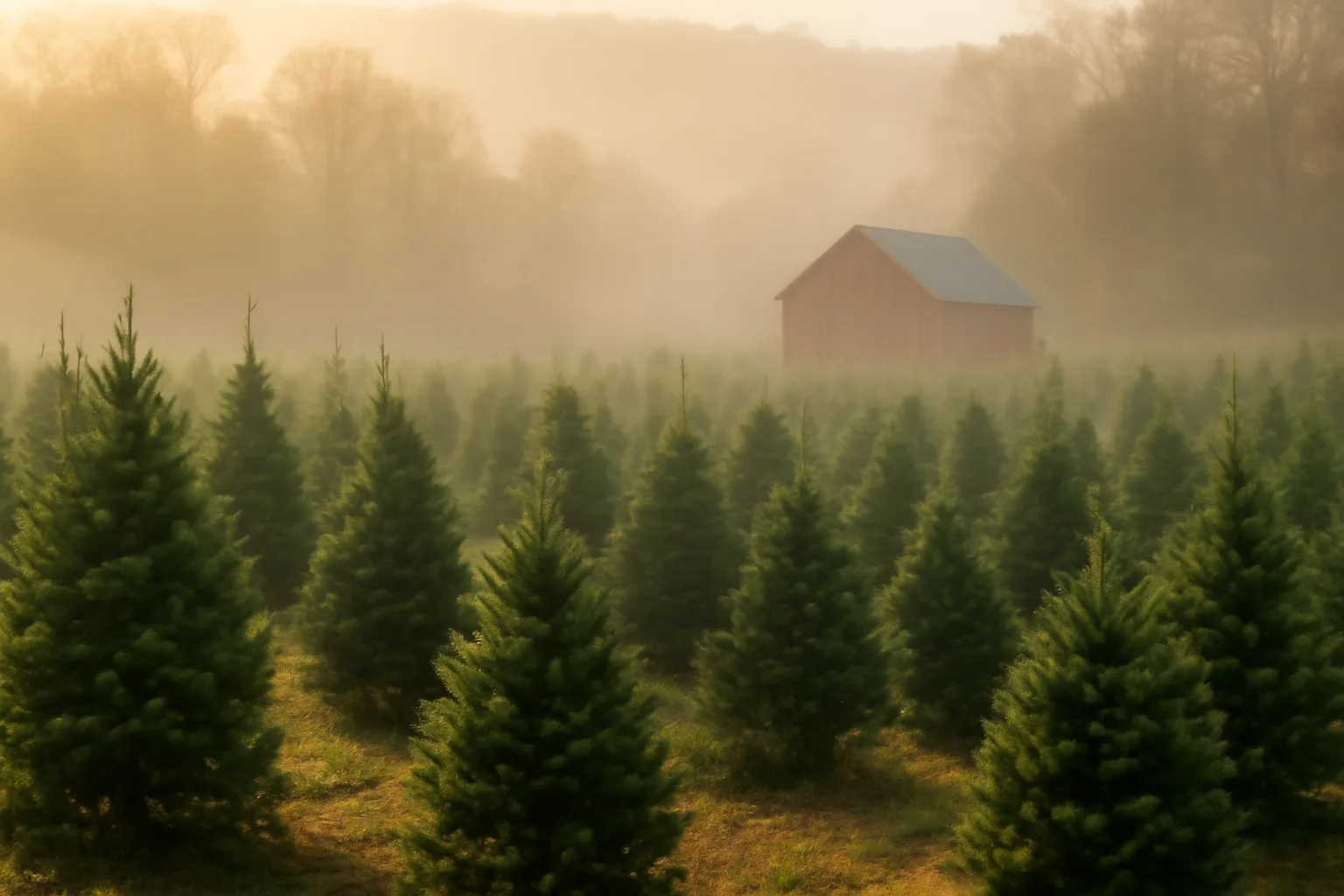
What you will find is a market that loves the choose-and-cut experience. Families in Little Rock, Fayetteville, and Fort Smith drive an hour or more to cut their own tree. The Arkansas climate favors Virginia pine, which handles the heat and humidity better than the northern spruces. You'll need to manage weeds and pests aggressively, but the payoff is a loyal customer base that returns year after year.
Do you need a license for a Christmas tree farm in Arkansas?
Yes, you need a state-issued nursery license. The Arkansas State Plant Board regulates the sale of any nursery stock, and that includes cut Christmas trees. The Arkansas Plant Act defines nursery stock as "all plants, trees, shrubs, vines, and other horticultural products for propagation, planting, or sale" [1]. The Plant Board's rules clarify that this includes cut trees [5].
Even if you're selling only cut trees you grew yourself, you're considered a nursery grower. The annual license fee is $50 [2]. You also need a sales tax permit from the Arkansas Department of Finance and Administration if you sell at retail [6]. Some counties and cities require a local business license, so check with your city clerk or county judge.
If you're selling live trees with roots, the same nursery license applies. There is no separate "Christmas tree farm license" in Arkansas. For a deeper look at the specifics, see our article on christmas tree farm license in Arkansas. Below is a breakdown of the first-year costs you'll face after getting your license.
How much does it cost to start a Christmas tree farm in Arkansas?
The University of Arkansas Division of Agriculture puts first-year establishment costs at roughly $1,800 per acre, with a range of $1,500 to $2,500 depending on the site and species [3]. That covers site preparation, seedlings, planting, lime, and fertilizer. Annual maintenance after the first year runs $300 to $500 per acre, mostly for mowing, weed control, and fertilizer.
You'll also need to budget for a drip irrigation system if your site is dry, about $300 to $500 per acre installed. The biggest variable is land cost. If you already own a few acres, you're ahead. If you're buying, count on $2,000 to $5,000 per acre in rural Arkansas. The chart above breaks down a typical first-year budget for a one-acre Virginia pine planting.
How long does it take to grow Christmas trees in Arkansas?
From the day you plant seedlings, it takes 6 to 8 years to harvest a 6- to 7-foot Virginia pine, the workhorse species in Arkansas [3]. Leyland cypress can be ready in 4 to 5 years, but it's less cold-hardy and riskier in the northern counties. Some growers plant a mix of species to stagger harvests and spread risk.
You won't see any income from tree sales for at least four years. During that time, you're mowing, spraying, and shaping. A few growers bring in early cash by selling wreaths, garlands, or leasing land for hunting, but the trees themselves are a long game. The 2017 Census showed that Arkansas Christmas tree farms sold a total of 7,400 trees, with most trees sold at retail on the farm [4].
How do you choose the right land and site?
Christmas trees need well-drained, slightly acidic soil with a pH between 5.0 and 6.5. Before you plant a single seedling, get a soil test from the University of Arkansas Soil Testing Lab [7]. The lab will give you lime and fertilizer recommendations specific to your field. Skip this step and you'll lose years of growth.
A gentle slope is ideal because it drains cold air away from the trees, reducing frost damage. Avoid low spots where water pools. If you're in the Delta region, focus on sites with sandy loam rather than heavy clay. The trees also need full sun, so clear any timber before planting. A 5-acre field is a manageable size for a part-time farmer, yielding about 5,000 trees at a 5x5-foot spacing.
What are the best Christmas tree species for Arkansas?
Virginia pine is the most reliable choice for nearly all of Arkansas. It tolerates the state's hot, humid summers, grows well on a range of soils, and has the classic Christmas tree shape when sheared. The University of Arkansas Extension recommends it as the first choice for new growers [3].
Leyland cypress is a faster-growing option that works well in southern Arkansas, but it's susceptible to winter damage north of I-40. Eastern redcedar is a native species that requires almost no care, but its foliage is prickly and it doesn't have the traditional pine scent. Some growers plant a small block of white pine in the higher elevations of the Ozarks, but white pine struggles with drought and heat stress. Stick with Virginia pine for your first planting.
How do you plant and care for Christmas trees in the first year?
Order seedlings a year in advance from a reputable nursery. Virginia pine seedlings cost about $0.75 each in bundles of 1,000 [3]. Plant them in late winter or early spring, as soon as the ground is workable. A 5x5-foot spacing gives you about 1,740 trees per acre. Use a mechanical tree planter if you can hire one, or plant by hand with a dibble bar.
Weed control is the single biggest task in the first three years. Grasses and broadleaf weeds steal water and nutrients. A pre-emergent herbicide applied in early spring, followed by mowing between rows, keeps the field clean. If you don't have irrigation, pray for rain during the first summer. Drip tape is a good investment if you're on a well or pond.
The ChooseAndCutPath Shear-Year and Choose-and-Cut Kit ($149) covers the first-year operations plan in a format that's easy to review with your local extension agent or board.
How do you market a Christmas tree farm in Arkansas?
Most Arkansas Christmas tree farms sell directly to the public through a choose-and-cut operation. You open the gates the weekend after Thanksgiving and let families walk the field, pick a tree, and cut it with a saw you provide. That experience commands a premium: a 6-foot Virginia pine sells for $50 to $70 in central Arkansas, compared to $40 for a pre-cut tree at a lot.
You'll need a few basics: a parking area, a cash register or point-of-sale system, and liability insurance. Some farms add a fire pit, hot cocoa, and a small gift shop. Agritourism liability laws in Arkansas provide some protection, but you still need a general liability policy. Advertise through local Facebook groups, community newspapers, and a simple website. If you're just across the state line in Alabama, check our guide on how to start a christmas tree farm in Alabama for the different licensing rules there.
What legal structure, taxes, and insurance do you need?
Most small Christmas tree farms in Arkansas operate as a sole proprietorship or a single-member LLC. The LLC gives you personal liability protection, which matters when you're inviting the public onto your land. You'll need an Employer Identification Number (EIN) from the IRS, even if you have no employees.
Sales tax is due on the sale of Christmas trees unless you're selling wholesale to a retailer. The current combined state and local sales tax rate in most areas is 8.5% to 11.5%. You must collect and remit it. The Arkansas Department of Finance and Administration issues a sales tax permit, and there's no fee for the permit itself [6].
Crop insurance is available for Christmas trees through the USDA's Risk Management Agency. The policy covers losses from fire, hail, and wind, but not drought or price drops [8]. Premiums depend on your coverage level. Talk to a local crop insurance agent before you plant.
What common mistakes should you avoid?
The biggest mistake new Arkansas growers make is planting too many acres the first year. Start with one or two acres, learn the rhythm, and expand later. Weeds will eat your lunch if you're not on top of them. A single missed mowing in June can set trees back a full year.
Another mistake is ignoring soil pH. If your soil is too acidic, the trees can't take up nutrients. Lime is cheap, but it takes months to work. Test early and apply lime the fall before you plant. Finally, don't assume you can sell every tree. Plan on a 10% to 15% loss from disease, deer, and poor form. Plant extra trees to account for it.
Frequently asked questions
Do you need a license for a Christmas tree farm in Arkansas?
Yes. The Arkansas State Plant Board requires a nursery license for anyone selling trees, including cut Christmas trees. The fee is $50 annually. You also need a sales tax permit from the Arkansas Department of Finance and Administration and possibly a local business license.
How much does a Christmas tree farm cost in Arkansas?
First-year establishment costs run about $1,800 per acre, including site prep, seedlings, and planting. Annual maintenance costs $300 to $500 per acre. Land is extra if you're buying; rural acres in Arkansas typically cost $2,000 to $5,000.
How long does a Christmas tree farm take in Arkansas?
From planting a seedling to harvesting a 6- to 7-foot Virginia pine takes 6 to 8 years. Leyland cypress can reach market size in 4 to 5 years. You'll have no tree sales income during the first four years.
What trees grow best for Christmas trees in Arkansas?
Virginia pine is the top choice for its heat tolerance and classic shape. Leyland cypress is a faster option for southern counties. Eastern redcedar is native and low-maintenance, but its foliage is prickly.
Can I sell cut-your-own trees without a license?
No. The Arkansas Plant Act treats cut trees as nursery stock, so you need a nursery license from the State Plant Board. The license costs $50 per year.
Do I need to charge sales tax on Christmas trees?
Yes, if you sell at retail. You must collect and remit Arkansas sales tax. The rate varies by location but is usually between 8.5% and 11.5%. Wholesale sales to retailers are exempt.
What insurance do I need for a Christmas tree farm?
General liability insurance is essential if you're inviting the public onto your property. Crop insurance is available through the USDA for fire, hail, and wind damage. Talk to an insurance agent about both.
How many trees can I plant per acre?
At a 5x5-foot spacing, you plant about 1,740 trees per acre. With a 6x6-foot spacing, it's about 1,210 trees. Wider spacing makes it easier to mow and shear.
Do I need an irrigation system?
It's not required, but drip irrigation greatly improves survival rates in the first two years. Arkansas summers can be dry, and a drip system costs about $300 to $500 per acre.
What is the Arkansas Plant Board?
The Arkansas State Plant Board is the state agency that regulates the sale of plants, including Christmas trees. It issues nursery licenses and inspects for pests and diseases.
Can I sell Christmas trees without a physical farm?
If you're buying pre-cut trees and reselling them, you need a nursery dealer license from the Plant Board, which also costs $50 per year. You still need a sales tax permit.
Are there grants for starting a Christmas tree farm in Arkansas?
There are no specific grants for Christmas tree farms. However, USDA programs like the Environmental Quality Incentives Program (EQIP) may help with conservation practices on your land.
Sources
- Arkansas Code § 2-16-202: Nursery stock includes all plants, trees, shrubs, vines, and other horticultural products for propagation, planting, or sale.
- Arkansas State Plant Board, Nursery Program: Annual nursery license fee is $50.
- University of Arkansas Division of Agriculture, FSA6060 Christmas Tree Production: First-year establishment costs of $1,800 per acre; Virginia pine takes 6-8 years to harvest; seedlings cost $0.75 each.
- USDA Census of Horticulture 2017, Arkansas: Arkansas had 21 Christmas tree farms with total sales of 7,400 trees.
- Arkansas State Plant Board Rule 3: Nursery Inspection and Quarantine: Nursery stock includes cut trees.
- Arkansas Department of Finance and Administration, Sales and Use Tax: Sales tax permit required for retail sales; no fee for the permit.
- University of Arkansas Soil Testing Lab: Soil testing provides lime and fertilizer recommendations.
- USDA Risk Management Agency, Christmas Tree Insurance Fact Sheet: Crop insurance covers fire, hail, and wind damage.