Last updated 2026-08-19
TL;DR
To start a Florida Christmas tree farm, match heat-tolerant species to irrigated land, then finish FDACS nursery registration under chapter 581, a Sunbiz entity, and a DOR sales tax account before you plant. Choose-and-cut takes 3 to 6 years to real sales. Confirm current fees with FDACS and your water management district. Florida has no separate Christmas tree farm license.
How do you start a Christmas tree farm in Florida?
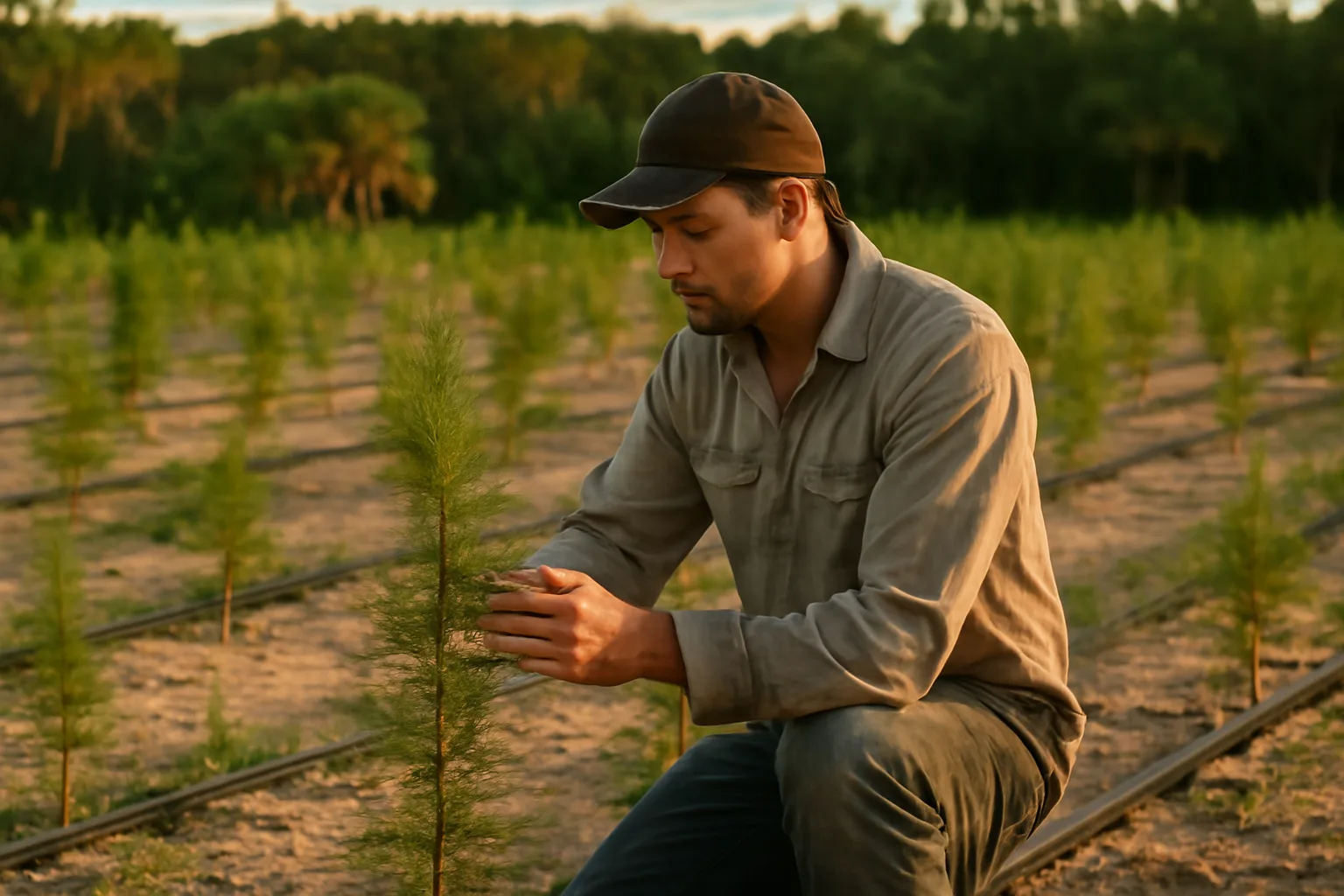
You start with land that can take irrigation and public visits, then you file the nursery and tax paper before you plant. Florida is not a Fraser fir climate. You grow heat-tolerant species, register with FDACS if you grow or sell nursery stock, open a Florida business and sales tax account, and wait 3 to 6 years for a real choose-and-cut weekend.[1][5][6][7]
Walk the county property appraiser and the water management district before you order a single liner. Zoning and well rules kill more first-year plans than beetles do.
The order that works is boring. Confirm the parcel can host retail customers (parking, driveway, restrooms, and a use the county will live with). File the entity with Sunbiz. Apply for the FDACS certificate of registration before you move or distribute nursery stock.[1][8] Ask the property appraiser about agricultural classification under s. 193.461.[3] Price drip irrigation as a crop cost, not a luxury. Plant a test block you can keep alive in August. Keep every receipt.
Do not advertise opening weekend until the trees look like Christmas trees. A sign and a Facebook event will not fix a 4-foot stick.
Want another state's paper path for comparison? Start with how to start a Christmas tree farm in Alabama. Alabama's crop mix is different. The habit of reading the statute before you plant is the same.
Florida heat, nematodes, and summer rain change the crop more than the forms do. The forms still come first if you plan to sell.
Do you need a license for a Christmas tree farm in Florida?
Yes. If you grow or sell nursery stock you need a FDACS certificate of registration. Florida has no separate license titled Christmas tree farm. You also need a Sunbiz business filing, a DOR sales tax account for retail cuts, and usually a county or city business tax receipt. Confirm the current nursery fee and inspection process with FDACS. Do not treat this as approval advice.[1][5][6][8][9]
Chapter 581 is the plant industry statute. It defines a nursery as "any grounds or premises on or in which nursery stock is grown, propagated, or held for sale or distribution, except where aquatic plant species are tended for harvest in the natural environment."[2] A choose-and-cut field that grows trees for sale sits inside that definition for most operators. Rule chapter 5B-2 is where the department sets the application mechanics.[9]
File the nursery registration early, not the week you want to hang a wreath. Inspectors work on their calendar, not yours. Moving stock without a certificate is the cheap mistake that gets expensive.
Other paper shows up based on what you actually do. Restricted-use pesticides mean a FDACS applicator license.[13] Employees can trigger workers compensation and labor rules. A farm stand that sells food has a different health path than a tree-only cut lot. None of that is a Christmas tree license. It is ordinary Florida business and agriculture paper.
Compare the license stack with Christmas tree farm license in Alabama if you are shopping land across the line. The agency names change. The idea does not: register the nursery, collect tax, stay legal with the county.
How much does a Christmas tree farm cost in Florida?
Plan on a five-figure cash outlay before the first paid cut, even on a few acres, and more if you buy land at retail. Nobody publishes a current, complete Florida Christmas tree establishment budget I trust. The closest honest picture is land plus irrigation plus 3 to 6 years of weeds, fuel, and liners, with your county's dirt price doing most of the damage.
Rural acreage in Florida is all over the map. Timber or pasture in the Panhandle is a different number than leftover grove land near a metro county. I will not invent a statewide price per acre. Pull actual listings and the property appraiser's roll for the section you want.
The paper is the cheap part. Florida LLC articles of organization cost $125 to file with the Division of Corporations.[5] Confirm that figure on the Sunbiz LLC page before you pay, and confirm the FDACS nursery fee with the Division of Plant Industry. Local business tax receipts vary by city and county. Those line items will not make or break you.
Irrigation will. Overhead or drip on Florida sand is not optional if you want a uniform row. I have watched people try to dryland Virginia pine and then replant the whole block. Replanting is how a cheap plan becomes a dear one. Add a well or a legal surface withdrawal, filters, and enough hose that you can actually finish a Saturday without a blowout.
Liners, herbicide, mowing, and shearing gear are the rest of year one. A used UTV, a good backpack sprayer, and hand shears beat a new compact tractor if you are on 1 to 5 acres. A gift barn in year one is a waste of money.
For how another southern state talks about cost categories, skim Christmas tree farm cost in Alabama. Use it for structure, not as Florida pricing.
Working capital is the item people skip. You will spend several seasons before a December weekend pays a bill. If that sentence bothers you, rent the land to someone else and buy cut trees to resell. That is a lot, not a farm.
How long does a Christmas tree farm take in Florida?
A Florida Christmas tree farm usually takes 3 to 6 years from plant to a tree people will pay cut-your-own prices for. Species, liner size, irrigation, and how hard you shear decide where you land in that window.[7] Anyone promising saleable field trees in 18 months is selling a different product, often a potted plant or a very small table-top.
Paper is faster than biology. Sunbiz filings can be done in a sitting. FDACS registration and the first inspection follow the department's queue, which you should confirm, not guess.[1][8] Agricultural classification is a property appraiser decision on the next tax roll, not a same-week sticker.[3]
Plant the first block the first summer you control the ground, even if the website is still ugly. Lost years do not come back. Stagger plantings so you are not staring at one giant harvest and then a hole.
You can sell something sooner. Wreaths, roping, potted cypress, and pre-cuts bought in (if your nursery and tax accounts allow it) fill a cash gap. That sideline is not the farm. The farm is the field you sheared for years.
Which Christmas tree species actually grow in Florida?
Leyland cypress, Arizona cypress, red cedar, sand pine, and Virginia pine are the species Florida growers actually use. Fraser fir is a mountain tree. Field-grown Fraser in Florida lowlands is a hobby in denial.[7]
UF/IFAS Gardening Solutions lists the species that succeed in state conditions, and it is the page I would send a neighbor to first.[7] Heat, humidity, and phytophthora on wet feet matter more than catalog photos. If your soil stays soggy after a summer storm, fix drainage or pick another block.
I would plant cypress on drip before I gambled a whole farm on Virginia pine in deep dry sand. Pine can work. Tip moth and poor form show up when you get lazy with scouting. Cedar is tougher and slower to look store perfect. Customers who grew up on fir will complain once. Then they smell a fresh cedar and often buy it anyway.
Arizona heat is a useful contrast if you are still arguing with yourself about species. Read how to start a Christmas tree farm in Arizona and notice how fast people give up on the wrong conifer.
Buy liners from a nursery that already ships into Florida and can document cleanliness. Bargain seedlings from a no-name lot are how you import someone else's scale insects.
What land, zoning, and greenbelt rules apply in Florida?
You need land the county will treat as a farm, and if you want the public on site you need a use that survives a site visit. Agricultural classification (greenbelt) is separate from zoning. Classification cuts the taxable value when the appraiser agrees the use is real. Zoning decides whether customers can park on your ditch bank.
Florida Statute 193.461 says "only lands that are used primarily for bona fide agricultural purposes shall be classified agricultural."[3] Bona fide means good faith commercial agricultural use. Size is one factor the appraiser weighs, not a magic statewide acreage I can quote. Confirm the local practice with the county property appraiser. A backyard of 40 trees will not get you there.
File for classification as soon as the use is real, not after you build a cute barn. Late filing is how people pay the non-ag bill for a year they did not need to.
Zoning is the part forums get wrong. Some counties treat choose-and-cut as agriculture and leave you alone. Others want special exceptions, event permits, or extra parking once you add wagons and cocoa. Walk planning staff with a simple site sketch. Do it before you pour gravel.
Still buying land? Look at access off a paved road, a high and dry pad for checkout, and a well site that is not in a wetland. Pretty woods with no ingress are a photography project.
Arkansas operators fight a different climate and a different assessor. The habit of reading the ag-classification statute first still holds in how to start a Christmas tree farm in Arkansas.
What water permits do you need to irrigate Christmas trees in Florida?
You may need a consumptive use permit from your water management district if your withdrawal is large enough. Florida Statute 373.219 lets the district or department require permits "for consumptive use of water" and set conditions so the use is not harmful to the water resource.[4] Thresholds and exemptions differ across the five districts. Confirm with the district that covers the parcel. Do not copy a neighbor's story from 2009.
A small existing well can be enough for a test acre and still fall short for 10 acres of drip in May. Ask about well construction permits at the county or water management district before you hire a driller. Surface water looks free until the pump intake sits in a dry ditch.
Design irrigation before you design the Instagram gate. Trees that brown in June do not sell in December.
If you use fertilizers or pesticides, look at FDACS agricultural best management practices for a water-quality path that matches your commodity. That is a separate conversation from the CUP. It is still worth a phone call if you sit over a sensitive spring shed.
How do you set up the business and sales tax in Florida?
Form a Florida entity with Sunbiz, then register with the Department of Revenue if you will make retail sales. Florida LLC articles of organization cost $125 to file on the Division of Corporations LLC page.[5] Confirm the fee there. Add a registered agent and, if you use a trade name, a fictitious name filing. Annual report dates are not optional.
Florida's state sales tax rate is 6 percent, and counties add a local surtax on top.[6] Retail Christmas trees are generally taxable tangible personal property. Confirm your exact rate and any exemption claims with DOR. Do not run cash weekends out of a cigar box and hope.
Get the Certificate of Registration in hand before the first paid tree leaves the farm. Card readers are easy. Explaining an unregistered December to a DOR auditor is not.
Some farm inputs may qualify for exemptions under the sales tax statutes. That is a product-by-product question, not a blanket farm holiday. Ask DOR or a Florida CPA who actually does agriculture. I would not take forum advice on exemption certificates.
California's tax and nursery stack is heavier. If you like reading long license lists, Christmas tree farm license in California will make Florida look short.
Does Florida agritourism law cover a choose-and-cut farm?
Usually yes, if the land is classified agricultural and the public is there for a harvest-your-own farm activity. Florida Statute 570.86 defines an agritourism activity to include agricultural related activity on a bona fide farm that lets the public enjoy "harvest-your-own activities and attractions."[11] Choose-and-cut is harvest-your-own. That is the point.
The preemption is the part that matters for county fights. Florida Statute 570.85 says a local government "may not adopt an ordinance, regulation, rule, or policy that prohibits, restricts, regulates, or otherwise limits an agritourism activity on land classified as agricultural land under s. 193.461."[10] There are limits around substantial construction and some health and safety rules. Read the full section. Do not tattoo one sentence on your wrist and dare the fire marshal.
Liability relief in s. 570.87 is real and narrow. It is not a substitute for a farm liability policy, and it expects you to post the statutory warning.[12] Buy the policy anyway. Families with saws, uneven ground, and a honey stand are a claims factory.
Parking, porta-potties, and a clearly marked exit do more for your Saturday than a second slogan. If you add hayrides or paid attractions, re-read the statute and call your insurer. Scope creep is how agritourism cases get ugly.
For a longer state guide that also wrestles with public-on-the-farm issues, see how to start a Christmas tree farm in California.
What does first-year work look like on a Florida Christmas tree farm?
Year one is dirt, water, and weeds. You soil-test, kill the pasture or brush, set rows you can mow, install irrigation, plant, and then you fight vines until you are sick of them. Shearing starts later, once the trees have something to cut. Skip weed control in a Florida summer and you do not have a tree farm. You have a thicket with receipts.
Plant fewer acres well. One clean acre teaches you more than five weedy ones. Scout weekly for bagworms on cypress and tip moth on pine. Spray only what you can legally apply. If the product is restricted, get the FDACS applicator license first.[13] If you have handlers in the field after a spray, the federal Worker Protection Standard is not optional reading.[14]
Keep a simple block map. Date planted, species, liner source, and what died. That notebook is worth more than branded flags.
Want a paper checklist for the first shear year? ChooseAndCutPath sells a $149 one-time Shear-Year + Choose-and-Cut Kit at /start. You do not need it to follow this guide.
Hurricanes are a Florida line item. Young trees snap or lean. Budget time after a named storm to stand trees back up and recut drip breaks. Pretending the Gulf is a rumor is not a plan.
What should you skip in year one?
Skip the event infrastructure. No wagon, no Santa contract, no custom cocoa shack. Those things eat cash that should go to drip fittings and liners. A pop-up tent and a folding table will check out the few friends who insist on visiting a 2-year-old field.
Skip the giant tractor. On a few acres a used UTV, a decent mower, and hand tools will plant and maintain the block. Buy iron after you know you like December work.
Skip mixing 12 species for the catalog. You will learn two well or eight badly. I would pick one cypress and one pine, plant them in separate blocks, and only then get cute.
Skip opening to the public the first December after spring planting. You will hate the reviews. Grow the crop.
Where do you confirm fees and forms before you plant?
Confirm every fee with the board that collects it. FDACS Division of Plant Industry for nursery registration and inspections.[8][9] Sunbiz for entity filings.[5] Florida DOR for sales tax.[6] Your county property appraiser for agricultural classification.[3] Your water management district for withdrawals.[4] FDACS pesticide licensing if you will apply restricted products.[13] Nobody writing a guide can promise a processing time or a current dollar figure that will still be right on the day you file.
Call, then do the form. Save the confirmation emails. If a clerk says your choose-and-cut is not agriculture, ask them to point at the statute they are using, then go read s. 193.461 and s. 570.85 yourself.[3][10]
ChooseAndCutPath is an independent publisher, not a law firm and not a service company. For a printable sequence you can carry to those offices, see /start.
If you like reading how other states name their boards, Christmas tree farm board in Alabama is a clean next tab.
Frequently asked questions
Do you need a license for a Christmas tree farm in Florida?
If you grow or sell nursery stock, you need a FDACS certificate of registration under chapter 581. There is no separate state license called Christmas tree farm. Add a Sunbiz entity, a DOR sales tax account for retail cuts, and usually a local business tax receipt. Confirm current FDACS fees and inspection timing with the Division of Plant Industry before you move stock.
How much does a Christmas tree farm cost in Florida?
Expect a five-figure outlay before the first paid cut on even a small block, more if you buy land. Irrigation, liners, and several unearned years dominate. The $125 Sunbiz LLC filing is real and cheap next to drip and dirt. Nobody has a current statewide establishment budget I trust. Price your county's land and a real well quote before you plant.
How long does a Christmas tree farm take in Florida?
Plan 3 to 6 years from plant to trees customers will pay choose-and-cut prices for. Liner size, species, water, and shearing set your place in that range. Entity and tax filings are days or weeks. Agricultural classification follows the property appraiser's roll. Anyone selling a full field crop in one Florida summer is not describing the same business.
Can you grow Fraser fir on a Florida Christmas tree farm?
Not as a field crop in ordinary Florida conditions. Fraser fir wants cool nights and a mountain climate. UF/IFAS points growers to Leyland and Arizona cypress, red cedar, sand pine, and Virginia pine instead. Potted imports for a lot are a retail play, not a farm. Plant what lives through August.
Do you charge sales tax on choose-and-cut trees in Florida?
Retail Christmas trees are generally taxable tangible personal property. Florida's state rate is 6 percent, plus the county surtax. Register with DOR and collect the combined rate for your location. Confirm any claimed exemption with DOR. A handshake cash lot without a Certificate of Registration is a bad plan.
Is choose-and-cut protected as agritourism in Florida?
Harvest-your-own on land classified agricultural fits the s. 570.86 definition of agritourism activity. Section 570.85 limits how local governments can ban or hem in that activity on greenbelt land. You still post the statutory warning, carry liability insurance, and obey genuine health and safety rules. Read the full sections, not a social post.
How many Christmas trees can you plant per acre in Florida?
Common spacings land around 1,000 to 1,700 trees per acre, depending on species and whether you leave drive alleys for customers. That is practice, not a Florida rule. Wider spacing is easier to mow and shear in heat. I would rather have 1,200 living trees than 1,800 that you cannot reach with a mower in July.
Do you need a pesticide license to spray a Florida tree farm?
If you apply restricted-use pesticides, yes. Get the matching FDACS applicator certification before you put product in a tank. General-use products still have labels with the force of law. Hired hands in treated areas bring the federal Worker Protection Standard into play. When in doubt, call FDACS pesticide licensing.
Is there a minimum acreage for agricultural classification in Florida?
There is no single statewide acreage that guarantees greenbelt. Section 193.461 tells appraisers to look at bona fide commercial agricultural use, and size is one listed factor. Counties differ in how they weigh a small specialty farm. Ask the property appraiser for that county and file when the use is real.
Can you start a Florida Christmas tree farm on 1 acre?
You can grow trees on 1 acre. Selling them as a public choose-and-cut is tighter: parking, restrooms, and whether the appraiser and zoning staff treat it as a farm. One clean irrigated acre is a good teaching block. I would not build a brand or a mortgage payment on a single acre of 3-year-old cypress.
Do you need workers compensation on a Florida Christmas tree farm?
If you have employees, Florida workers compensation rules apply, and agriculture has its own wrinkles in chapter 440. Family-only labor is a different fact pattern than Saturday cashiers. Confirm with the Division of Workers' Compensation and your agent. Do not hire a December crew on a handshake and a cooler of sodas.
Can you buy cut trees from Georgia or North Carolina and sell them on your Florida farm?
Yes, many farms mix pre-cuts with their own field trees. That is retail, so sales tax still applies. Incoming nursery stock and plant material can trigger FDACS inspection rules. Keep invoices. Do not call a parking-lot reload a 6-year-old Florida farm. Customers can tell.
What insurance should a Florida choose-and-cut farm carry?
A farm liability policy that expressly covers public pick-your-own, plus auto if you move people, and property cover for irrigation and a checkout shed. The agritourism statute is not a policy. Tell the agent you hand out saws. Umbrella coverage is cheap compared with one broken ankle claim on wet sand.
Sources
- Florida Senate, Fla. Stat. § 581.131 (2024): Nurserymen must obtain a FDACS certificate of registration before moving or distributing nursery stock in Florida.
- Florida Senate, Fla. Stat. § 581.011 (2024): Defines nursery as grounds where nursery stock is grown, propagated, or held for sale or distribution.
- Florida Senate, Fla. Stat. § 193.461 (2024): Only lands used primarily for bona fide agricultural purposes shall be classified agricultural.
- Florida Senate, Fla. Stat. § 373.219 (2024): Water management districts may require permits for consumptive use of water and set conditions to protect the resource.
- Florida Division of Corporations, Form a Florida LLC: Florida LLC articles of organization listing shows a $125 filing fee on the Sunbiz e-file page.
- Florida Department of Revenue, Sales and Use Tax: Florida state sales and use tax rate is 6 percent, with local discretionary surtax added by county.
- UF/IFAS Gardening Solutions, Christmas Trees: UF/IFAS identifies Florida-adapted Christmas tree species such as Leyland cypress, cedar, and pines rather than Fraser fir.
- FDACS, Nursery Inspection and Certification: FDACS Division of Plant Industry inspects and certifies Florida nurseries that grow or distribute nursery stock.
- Florida Administrative Code Rule 5B-2.002: Rule 5B-2.002 sets the application process for a nursery certificate of registration.
- Florida Senate, Fla. Stat. § 570.85 (2024): Local governments may not adopt ordinances that prohibit or limit agritourism on land classified agricultural under s. 193.461.
- Florida Senate, Fla. Stat. § 570.86 (2024): Agritourism activity includes harvest-your-own activities on a bona fide farm open to the public.
- Florida Senate, Fla. Stat. § 570.87 (2024): Limited liability protections for agritourism operators are conditioned on the statute, including required warning practices.
- FDACS, Pesticide Applicator Certification and Licensing: Florida requires FDACS pesticide applicator certification to apply restricted-use pesticides.
- U.S. EPA, Agricultural Worker Protection Standard: The federal Worker Protection Standard applies to agricultural establishments that use pesticides and have workers or handlers.